

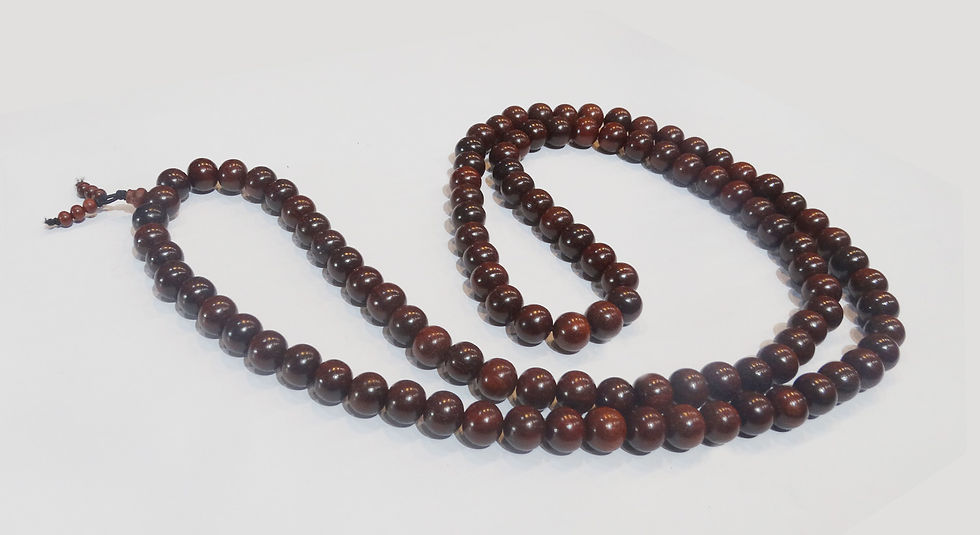
The Karungali Mala (also known as Black Wood Mala) is a traditional mala (prayer beads) from South India, made from natural black wood. The beads are typically crafted from the Karungali tree, which is known for its dark-colored wood, giving the mala a deep black hue. The Karungali Mala is considered sacred in many spiritual and religious practices, especially within the context of South Indian traditions.
Key Features of the Karungali Mala:
Material: The beads are made from the Karungali tree (also called Indian Ebony or Black Wood). The wood is known for its durability, smooth texture, and beautiful black color, which makes it an attractive material for prayer beads.
Bead Size and Design: Karungali malas typically consist of 108 beads, with one sumeru bead (also called a "guru bead") at the center, and may be strung in a traditional fashion, either on a cord or elastic string for convenience.
Natural and Unpolished: The beads used in the Karungali mala are often left in their natural form without excessive polishing or chemical treatments. This preserves their natural energy and vibration.
Traditional Use: This mala is used for chanting mantras, prayers, and meditation, especially in Hindu, Buddhist, and spiritual practices. The deep black color of the wood gives it a sense of mysticism and connection to the earth.
Spiritual Significance and Benefits:
Purification and Protection: The Karungali mala is believed to have protective properties, guarding the wearer against negative energies. It is said to purify the aura and create a shield of protection around the individual.
Grounding and Stability: The dark, grounded nature of the black wood is associated with strength, stability, and deep connection with the earth. The mala is thought to help the wearer stay grounded and focused, especially during meditation or spiritual practices.
Enhances Meditation: It is believed to aid in calming the mind and enhancing meditation by providing mental clarity, concentration, and focus.
Spiritual Growth: The Karungali mala is used to connect with higher spiritual energies. It is considered a tool for deepening one's spiritual practice, facilitating introspection, and gaining wisdom.
Balancing Energy: The mala is thought to balance the energy of the wearer, promoting peace, serenity, and balance in life. It may be particularly helpful for people who need emotional stability and grounding.
Aesthetic Appeal: Aside from its spiritual and protective benefits, the mala has an aesthetic appeal due to its sleek, dark appearance. The rich, natural wood color adds to its elegance and appeal as a piece of spiritual jewelry.
How to Use the Karungali Mala:
- Chanting: Use the mala for chanting mantras or prayers. The beads are typically used for repeating a mantra 108 times, helping to maintain focus and deepening the spiritual connection.
- Meditation: You can also use the mala as a tool during meditation to help you maintain focus and achieve a deeper state of awareness.
- Wear It: Many people wear the Karungali mala as a necklace or bracelet to benefit from its protective and grounding energies throughout the day.
Where to Find:
The Karungali Mala is typically available in spiritual and religious shops in South India, or it can be purchased online from various retailers specializing in natural and traditional malas.
In conclusion, the Karungali Mala made from natural black wood offers a deep spiritual connection, bringing protection, stability, and grounding energies. It is a valuable accessory for anyone seeking to enhance their meditation, prayer practices, or simply looking for a powerful, natural spiritual tool.
Note:
A. Karungali Mala (Black Wood) South India - Natural
B. 100% genuine product
C. Tax and shipping is included in the price.
D. Each of our product is tested and certified by government-accredited laboratory.








+South+India+-+Natural+-+(RM-08))